From ClawdBot to OpenClaw: A Solo Founder Case Study in AI Agent

This week, one headline caught the attention of the indie hacking and AI agent startup world.
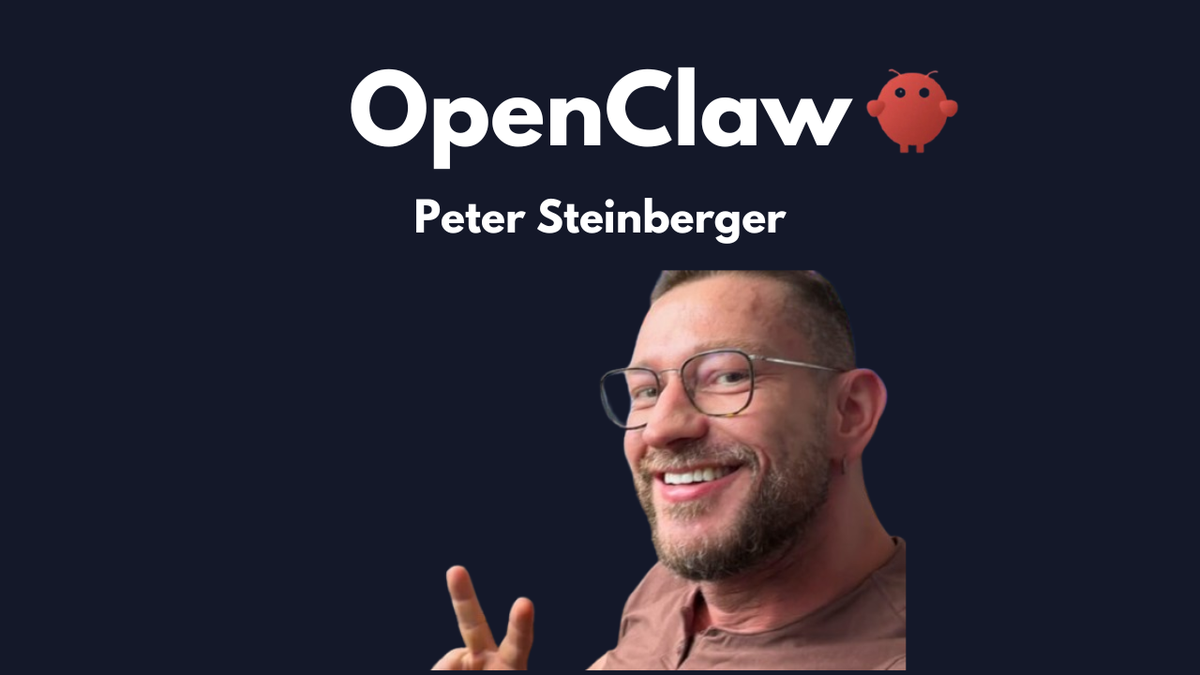
Peter Steinberger (@steipete), creator of OpenClaw and formerly ClawdBot, is joining OpenAI. The project will continue as open source under a foundation supported by OpenAI.
There is no confirmed billion dollar acquisition or public valuation. But the story matters far more than a price tag.
A solo founder built an autonomous AI agent, gained massive traction in months, and became strategically relevant to one of the most important AI companies in the world.
For anyone interested in indie hacking, solopreneurship, one-person startups, or building a bootstrapped SaaS, this is more than news. It is a textbook example of product-led growth.
No massive marketing team. No venture-backed ad spend. Just product, community, and timing. This is how modern one-person startups scale attention.
It is a blueprint.
What is Clawdbot / OpenClaw?
OpenClaw, originally launched as ClawdBot, is an open-source personal AI agent designed to execute real-world tasks.
It connects to email, calendars, and messaging tools. Instead of simply answering questions, it performs actions. It can clear inboxes, manage schedules, send messages, and automate everyday workflows. In simple terms, it moves from conversation to execution.
This fits into the broader rise of AI agent startups and AI automation tools for business, where the goal is not just smarter chat but real operational help.
The positioning was sharp and easy to understand. ClawdBot was not a chatbot and not “AI for everything.” It was an AI agent that executes workflows.
That clarity is essential in any serious micro-SaaS or bootstrapped startup. When you solve one real operational problem in a focused way, distribution becomes easier, messaging becomes clearer, and adoption becomes faster. Simplicity wins.
Who made ClawdBot? Peter Steinberger
Peter Steinberger is a developer from Vienna, Austria. Long before ClawdBot, he built PSPDFKit, a successful B2B software company providing document-processing tools used by developers worldwide.
PSPDFKit started almost by accident in 2011 while Peter was waiting more than six months for a US work visa. With unexpected free time, he experimented with building a paid software component. What began as a side project quickly attracted paying users and evolved into a real business, eventually earning more than a full-time salary.
He still moved to San Francisco and tried balancing a demanding job with running the company. It nearly burned him out. In 2012, he committed fully to entrepreneurship and spent the next 13 years building PSPDFKit into a financially successful venture.
After achieving financial independence and stepping back, something unexpected happened: he felt creatively empty. The business had succeeded, but the intellectual challenge was gone.
ClawdBot emerged from that second chapter, not from financial pressure, but from curiosity and renewed passion for AI.
Because while experience compounds leverage, the deeper driver of every strong one-person startup is the same: solve problems that genuinely interest you, then share the solution with others.
How was OpenClaw born?
In April 2024, Peter started thinking about building a life assistant. He wanted an AI that could actually perform tasks, not just chat. At the time, the technology was not ready, so he paused the idea.
By late 2025, he realized that big tech companies still had not delivered a truly useful personal AI agent. Most tools could answer questions, but they could not really take action. So he built one.
ClawdBot began as a simple WhatsApp relay that forwarded his messages to an AI model and sent the replies back. It was basic, but functional.
While traveling in Morocco, he sent a voice message, even though he had not built voice support. Instead of failing, the system figured out how to convert the audio into text using tools already available on his computer, then processed it and responded correctly.
That moment showed him something important. ClawdBot was not just replying. It was starting to coordinate tools and take action.
The project evolved quickly as other developers contributed. When it was renamed, the AI itself suggested the name ClawdBot.
The idea was simple: give AI hands, not just a voice, and let it work under your control.
OpenClaw's Revenue
There are no publicly verified revenue numbers for OpenClaw or ClawdBot. No confirmed ARR and no disclosed financial metrics.
ClawdBot was open source from the beginning, and monetization was not clearly structured at launch. In this case, distribution and ecosystem relevance came before revenue.
That can be a valid strategy in certain AI agent startup categories, especially when building infrastructure or open ecosystems. But for most bootstrapped SaaS founders, revenue must follow quickly.
Distribution is power. Revenue is sustainability.
ClawdBot Growth Strategy: How a Solo Founder Scaled Distribution
ClawdBot did not grow because of ads or a big launch. It grew because of smart positioning and structural leverage.
Open Source as a Growth Strategy
Making ClawdBot open source removed friction from day one. Developers did not have to trust a new startup blindly. They could read the code, test it themselves, and run it locally. That transparency became marketing.
In technical markets, especially for AI automation tools, trust is everything. If your product touches user data or workflows, openness can dramatically accelerate adoption.
Open source is not for every business. But in developer ecosystems, it can replace paid marketing and act as a powerful product distribution strategy.
Startup Positioning Framework
ClawdBot was easy to explain. An AI agent that executes tasks. That single sentence did most of the marketing work.
When people instantly understand what your product does, they can repeat it to others. In solopreneur marketing, clarity compounds. The simpler your positioning, the easier it spreads. Confusion slows growth. Clarity accelerates it.
Find and Leverage Startup Trends
ClawdBot launched at a moment when the market was already excited about autonomous AI agents and AI automation for business.
Instead of trying to create a new category, it positioned itself inside an existing wave. That is a key principle in startup growth strategies. You do not need to create demand from scratch. You need to insert yourself where attention already exists.
Trend alignment reduces the cost of distribution.
Reputation Is Long Term Leverage
Peter’s past work helped amplify early traction. People already knew he could ship serious products.
For aspiring indie hackers, this is a powerful lesson. Every product you build increases your future leverage. Every shipped project strengthens your credibility. Even small wins matter. Consistency compounds.
If you want to build a good business, do not just think about one launch. Think about building a reputation over time.
Business Ideas in the AI Agent Era
The rise of AI agent startups creates serious opportunities. Not random experiments. Not simple automation tools with no real value. Real digital businesses. Below you have three ideas.
what I would be working on if I started another company today https://t.co/7dpDyiHAW6 pic.twitter.com/kKDFxcbtZv
— Han Wang (@handotdev) February 20, 2026
- Vertical AI Operations Agent for Compliance Industries
One strong opportunity is building a specialized AI agent for law firms, accounting firms, or regulatory consultancies.
Such a tool could monitor deadlines, extract key clauses from documents, summarize legal content, and track compliance risks. These tasks are repetitive and high stakes. Mistakes are expensive.
This becomes a focused B2B micro-SaaS with strong pricing power. Compliance work creates clear ROI, which supports premium pricing.
This is a realistic bootstrapped startup opportunity.
- AI Revenue Operations Agent for SaaS Companies
Many SaaS companies struggle with CRM hygiene, lead routing, churn detection, and follow ups. These operational gaps directly impact revenue.
An AI revenue operations agent could clean CRM data, flag churn risks, automate follow ups, generate pipeline insights, and highlight high intent leads.
This is not a side project. It directly influences revenue performance. That makes it a high value digital business opportunity with clear measurable impact.
- AI Executive Assistant for Founders
Another opportunity is building a focused AI executive assistant for founders and creators.
Instead of being a generic chat tool, it could summarize Slack threads, prepare investor updates, organize weekly priorities, draft reports, and track KPIs automatically.
Positioned as a Founder Operating System, it aligns directly with the one person startup and modern solopreneurship movement.
It is understandable. It solves real operational friction. And it has clear commercial potential.
That is all for this week. If you are building, experimenting, or thinking about launching your own startup, remember that the gap between an idea and real impact is smaller than it looks. Keep shipping, keep learning, and keep building leverage. I will see you next week with another case study and practical lessons you can apply immediately.